

Many believe the American Environmental Movement had an unlikely start in 1962 with the publication of The Silent Spring written by a marine biologist named Rachel Carson. While her warnings about the death of birds, thus the silence, and their absence from traditional migratory habitats, thus the spring, facilitated the ban of the pesticide DDT in 1972, it sparked a larger debate about the role of Man as a captain or steward of nature. What ensued, somewhere in between the lunar landing and the hippie communes, was the official designation of Earth Day. In the same year the Environmental Protection Agency was formed to add power to influence. Ecologist James Lovelock went as far as to anthropomorphize the entirety of the ecosystem as Gaia, named for the Greek Goddess of the Earth. This made the Earth a super-organism extraordinaire and placed her above Man. Dominion had been reversed. Mother Nature had called and Americans of all types were going home or at least to Woodstock. But this cozy relationship didn’t last. The early 1970s brought an oil embargo, Japanese imports and unemployment, and the resource rich nation once again stoked the economic furnace to reheat prosperity. The United States went from nature boy to the world’s largest polluter in less than three decades.
As the center of manufacturing began to shift from North America to East Asia disturbing images of coal fire plants heaving carbon and soot into the air and children wearing surgical masks began appearing everywhere. It was easy to notice what was wrong from afar and the old rumblings of reduce, reuse, and recycle started anew in elementary schools and conscientious businesses. Though the US had failed to ratify The Kyoto Protocol, a United Nations framework designed to stabilize greenhouse gas concentrations in the atmosphere believed to cause global warming, it reignited the longstanding dispute regarding the Nation’s custodial responsibilities not only to the earth but the global community as well. Ironically, it was the Former Vice President Al Gore, defeated in the controversial 2000 Presidential election, who played the part of Rachel Carson – bellwether and town crier. After years of research and lecture, he was featured in an independent documentary film entitled An Inconvenient Truth which chronicled his educational program on the dangers of climate change caused by pollution. For his frightening and compelling account of the State of the Earth address, Gore was awarded the Nobel Peace Prize in 2007. Mother Earth was back and this time she was pissed – “Behave or else!”
The American Environmental Movement has had many names, and though it has been with us always, reappears in its more potent form with some regularity. The land was settled by Europeans looking for pristine lands with little regard for the previous tenants. The first philosophy of the continent was Transcendentalism a combination of idealism and a belief in the unity of all creation. Henry David Thoreau extolled the virtues of Man in nature and encouraged all to return to the solemnity of Walden’s Pond. Whitman gave America its natural voice while Emerson provided the philosophy of oneness. Utopian Colonies followed in places like Brook Farm, New Harmony, and Shakertown where Man and Nature coexisted as in the beginning. A half a century later, John Muir sanctified its peaks and valleys when he established the Sierra Club for likeminded preservationists. Teddy Roosevelt created the National Parks System to keep the treasures of the earth out of reach to those who would pluck them. Decades later his distant cousin, Franklin Delano Roosevelt, created the Civilian Conservation Corps to defeat both the Great Depression and the erosion of the earth that kicked up the Dust Bowl of the 1930s. And so on and so on it goes. Apparently there really is time for every purpose under heaven.
Jeff DeGraff
Connect with me on Twitter
Join me on Facebook
Visit InnovationYou.com

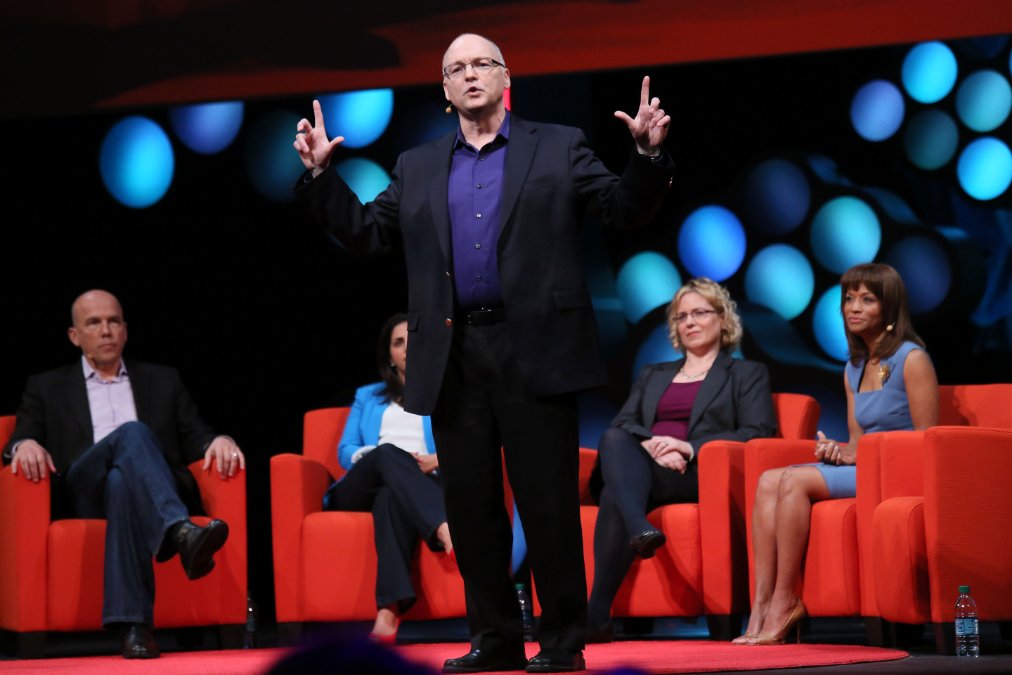
Jeff DeGraff is the Dean of Innovation – an author, speaker, and advisor to Fortune 500 companies and mission-driven organizations worldwide. He’s the CEO and Founder of Innovatrium, Founder of Intellectual Edge Alliance, and Clinical Professor of Management and Organizations at the Ross School of Business at the University of Michigan. Jeff co-created the Competing Values Framework and developed the Innovation Code and Innovation Genome methodologies which provide organizations with practical tools to reconcile competing priorities and drive breakthrough performance. His mission is the democratization of innovation: making systematic innovation accessible to everyone, everywhere, every day.