
Original article published on Leadership Freak by Jeff DeGraff
My mom and dad had different parenting styles. My mother admonished me anytime I tried something uncertain and perceived as potentially dangerous.
On the other hand, my father watched as my risky behavior brought skinned knees, bruises, and stitches. As he helped me back to my feet, he would simply say, “Hurt, didn’t it?”
Risky behaviors improve creative skills.
Failure cycle:
All skills go through the failure cycle.
For example, if you’re learning to play a new instrument, it doesn’t matter if you are eight or eighty. You are going to experience the failure cycle.
Most people get stuck in the planning process. You know, the meeting about the meeting. They chance little and create less.
Artists and entrepreneurs understand the creative process is iterative. It requires a series of prototypes to prove the concept.
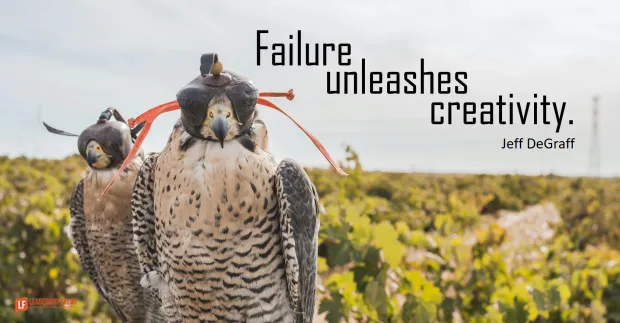
Failure unleashes creativity.
The first draft of the novel. The failed restaurant before the successful one. In these preliminary steps, creativity is unleashed and becomes manifested as something better or new. It reveals what works, and more importantly, what doesn’t.
Six skills to master the creative process:
- Clarify: Getting the challenge right
- Replicate: Mimicking and reapplying ideas
- Elaborate: Multiplying ideas by adding new ones
- Associate: Connecting ideas with analogies
- Translate: Creating stories from ideas
- Evaluate: Selecting the best ideas
Think of these skills like the tools in a toolbox – hammer, wrench, screwdriver, etc. They are all essential, but not interchangeable. Each has a different function in the act of creation.
Hurt, didn’t it:
Anyone can develop creativity skills through a see-one—do-one process. It requires that we try new things and accelerate the failure cycle. Take a deep breath and rapidly work through those “Hurt, didn’t it?” moments, and then move onward with new confidence and skills.
How might leaders accelerate the failure cycle for teams or individuals?
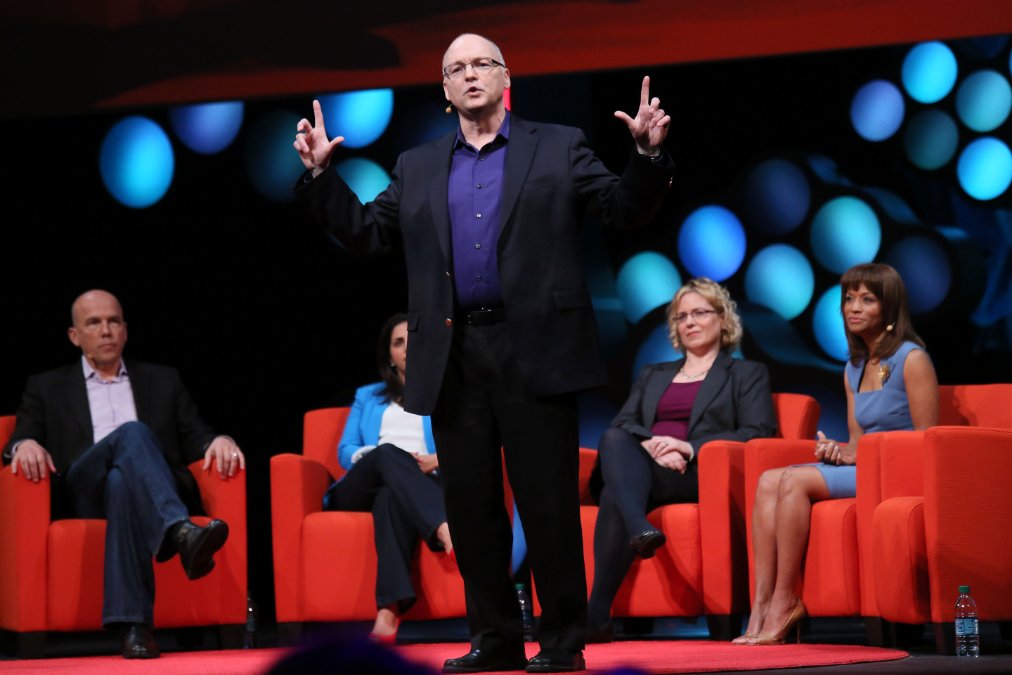
Jeff DeGraff is the Dean of Innovation – an author, speaker, and advisor to Fortune 500 companies and mission-driven organizations worldwide. He’s the CEO and Founder of Innovatrium, Founder of Intellectual Edge Alliance, and Clinical Professor of Management and Organizations at the Ross School of Business at the University of Michigan. Jeff co-created the Competing Values Framework and developed the Innovation Code and Innovation Genome methodologies which provide organizations with practical tools to reconcile competing priorities and drive breakthrough performance. His mission is the democratization of innovation: making systematic innovation accessible to everyone, everywhere, every day.